- AI
EU AI Act: the watermark deadline most comms teams will miss

You're breaking EU law with your AI-generated content in six months — without even knowing it. AI watermarks will be mandatory starting this November.
In South Korea, an AI-generated image of an escaped wolf caused public panic for days this month — even authorities shared it before it was debunked. Imagine what an AI-generated image of your CEO, your product recall, or your factory incident could do.
But the new European Union labeling rules don't just target deepfakes like this. They target the AI your team uses every day — press releases, visuals, brochure texts, product videos. From November 2, 2026, all of this falls under Article 50 of the EU AI Act:
- AI-generated images, audio, and video that appear realistic — always require labeling, even if created in-house and editorially approved.
- AI-generated text — only if it informs the public on matters of public interest, and no human demonstrably holds editorial responsibility. So LinkedIn is safe ;)
- Chatbots — must identify themselves as AI at every first interaction.
- Stylized graphics, illustrations, abstract designs — no labeling required.
Rule of thumb: the more realistic the content and the less visible the human oversight, the clearer the obligation.
One thing most companies will overlook: automation
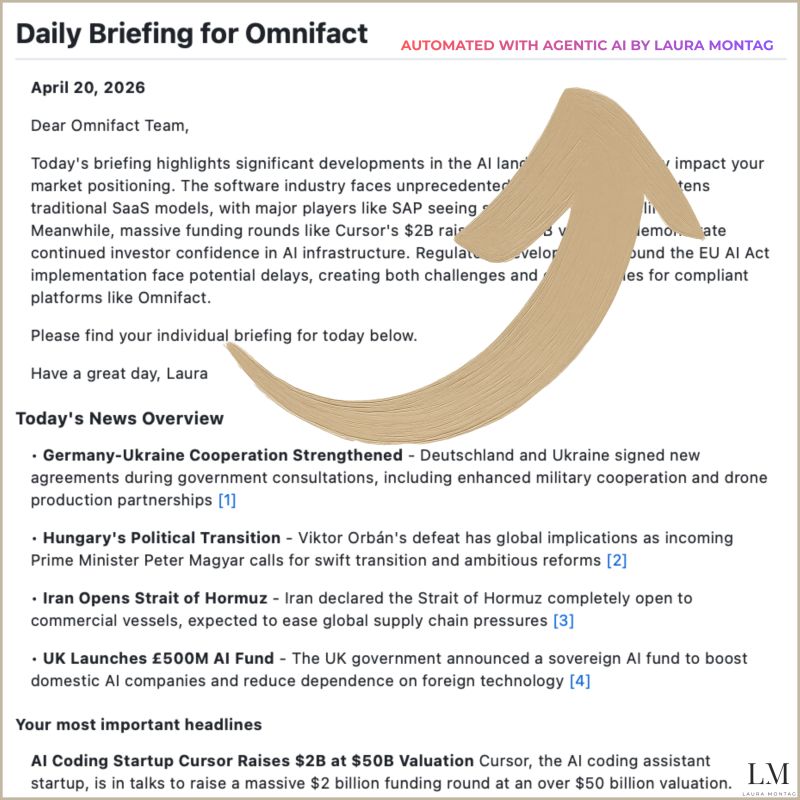
If your process generates and publishes content — scheduled posts, AI-drafted newsletters — without a human checkpoint that includes watermarking, you're non-compliant by design. Labeling needs to be a built-in step, not a manual afterthought.
What communications and marketing departments should do now
- Content audit. Where are AI tools already in use — for text, images, video, monitoring, graphics? Most companies don't have the full picture.
- Document editorial workflows. Who reviews content, who holds editorial responsibility by name? This documentation is your most important compliance instrument — and often your protection from the labeling requirement altogether.
- Define labeling standards. Which content needs a visible label, which needs a technical watermark? How should it look?
Companies that build transparent, documented processes will have a genuine competitive advantage, because verifiable authenticity is becoming a currency of its own. Especially in regulated industries — pharma, financial services, critical infrastructure — early compliance sends a clear message: we have nothing to hide.